定常過程への変換
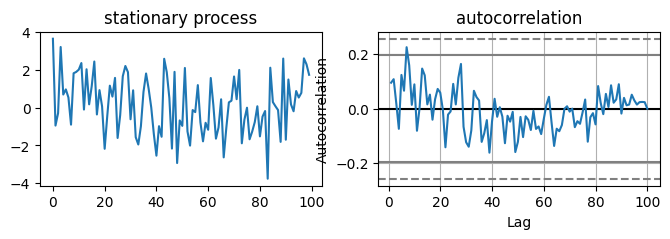
分析しやすいデータ:定常過程
定常過程の場合、期待値や自己共分散が時間を通じて一定なので、例えば「1月の平均気温」は1月の各観測値の平均をとれば求められる。
ARIMAモデルは定常過程との相性がよいため、モデルを使った分析もしやすい。
Source
import matplotlib.pyplot as plt
import numpy as np
import pandas as pd

n = 100
np.random.seed(0)
mu = np.random.normal(size=n)
noise = np.random.normal(size=n)
y = mu + noise


fig, axes = plt.subplots(figsize=[8,2], ncols=2)
axes[0].plot(range(n), y)
axes[0].set(title="stationary process")

pd.plotting.autocorrelation_plot(y, ax=axes[1])
_ = axes[1].set(title="autocorrelation")